Retail Fixture Types: A Complete Guide to Displays and Fixtures
A customer never says the word fixture. They pick a paddle off a wall, run a hand down a jacket sleeve, look at a table of folded tees, and decide whether the store feels like the brand or feels like a warehouse. Everything they touch on the way to that decision is a fixture, and most of it was chosen months earlier by someone comparing line items in a spreadsheet.
That gap between how fixtures get bought and how they get used is where a lot of retail programs go sideways. What follows is a plain guide to the main types, what each one is genuinely good at, and the point where the stock version stops being the right answer.
Fixture or display, and whether the difference matters
The two words get used interchangeably and it rarely causes a problem, though there is a real distinction underneath.
A fixture is the permanent architecture of the selling floor, and that covers wall systems, gondolas, tables, racks, cases, and the cash wrap. It holds product, it decides how someone moves through the room, and it is meant to still be doing both in five years.
A display is shorter-lived and closer to a campaign. A seasonal endcap counts, so does a countertop unit built for one product launch, and so does a floor stand that ships to five hundred doors for a single quarter.
Keeping them straight is a budgeting question more than a vocabulary one. Fixtures are a capital decision measured in years, and displays sit closer to marketing spend measured in seasons. The stores that look tired eighteen months after opening are usually the ones where the fixtures got bought on a display budget.
Wall systems
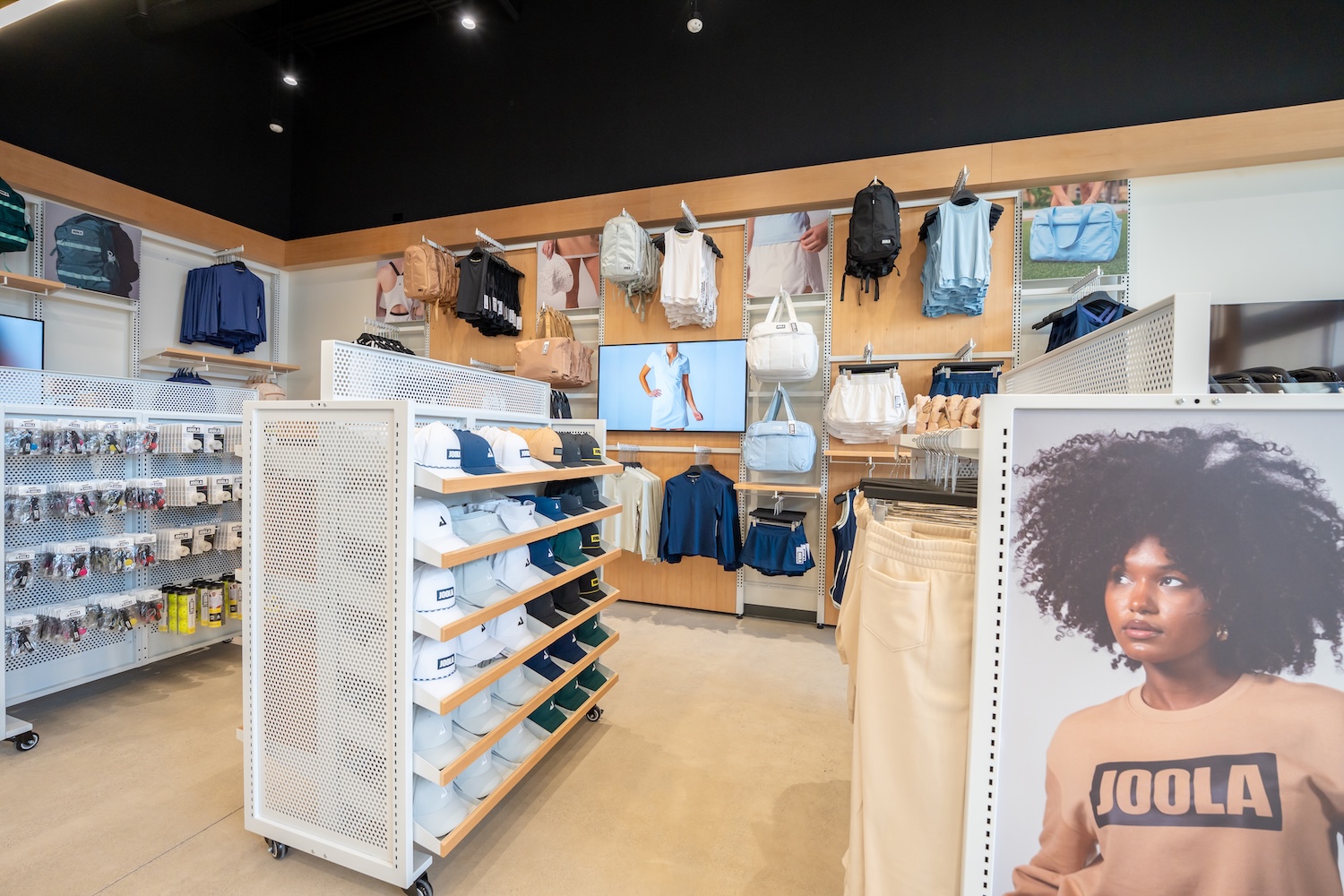
The perimeter wall is the highest-value real estate in almost any store, because it is what a customer sees from the door and the eye gets there well before the feet do.
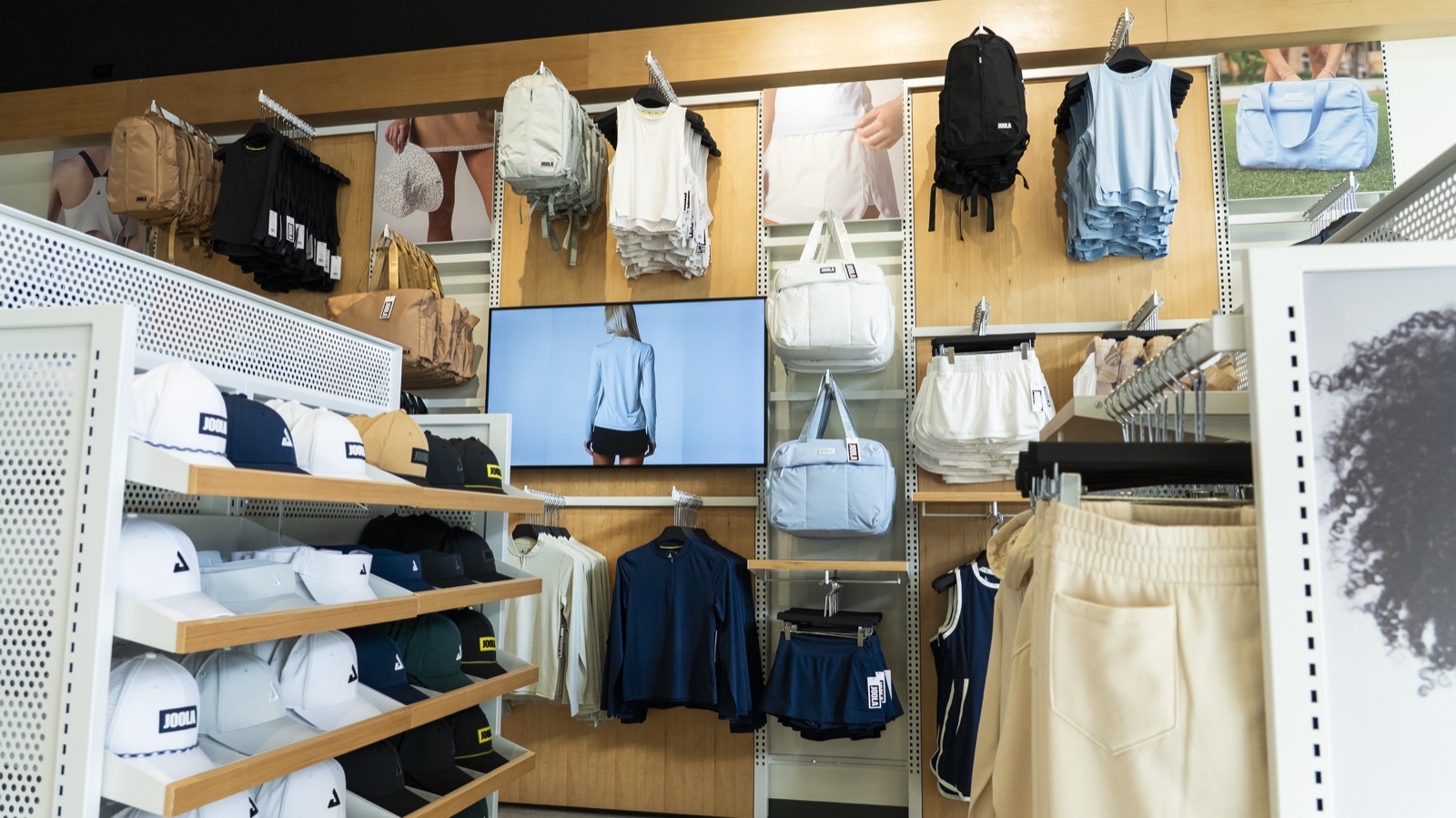
Slatwall is the most common stock version, a panel grooved horizontally so brackets, shelves, and hooks move without tools. It is inexpensive and it is everywhere, which is both the appeal and the problem. A slatwall run inside a branded store reads as generic, because the customer has seen that same panel in a phone case kiosk and a hardware aisle.
Slotted standards and channel systems do the same job with a cleaner face, since the hardware disappears into a vertical channel instead of running across the whole wall.
Custom wall systems get drawn for the room, and this is where a brand's material vocabulary actually lives. We have milled and assembled hemlock into a warm wall, integrated perforated steel that takes hardware anywhere across its face, and carried a ceiling accent color down into the brackets so the wall reads as architecture rather than as storage. On Selkirk's store the wall had to hold paddles at a height where a customer could lift one down and swing it, which is not a spec any catalog panel is designed around.
The practical test is whether the wall can be reset. Product mixes change every season, and a wall that needs a contractor to rearrange becomes a wall nobody rearranges.
Gondolas and floor shelving
A gondola is the freestanding double-sided unit that forms the aisles through the middle of a floor. Grocery and mass retail run on them at full height, because the job there is capacity and the customer already knows what they came for.
Brand retail asks something different, and this is where stock gondolas start working against the room. Standard heights are set for how much product a unit holds rather than for what a customer can see over, and the finish range is narrow enough that the piece reads as shelving instead of as part of the store.
Most of the stores we build are organized around something worth walking toward. At Selkirk that is a full-size pickleball court sitting in the middle of the room. When a floor has a focal point like that, every mid-floor fixture has to stay low enough that someone standing at the entrance can see past it, which rules out a standard gondola before anyone gets to the conversation about finishes.

Nesting tables
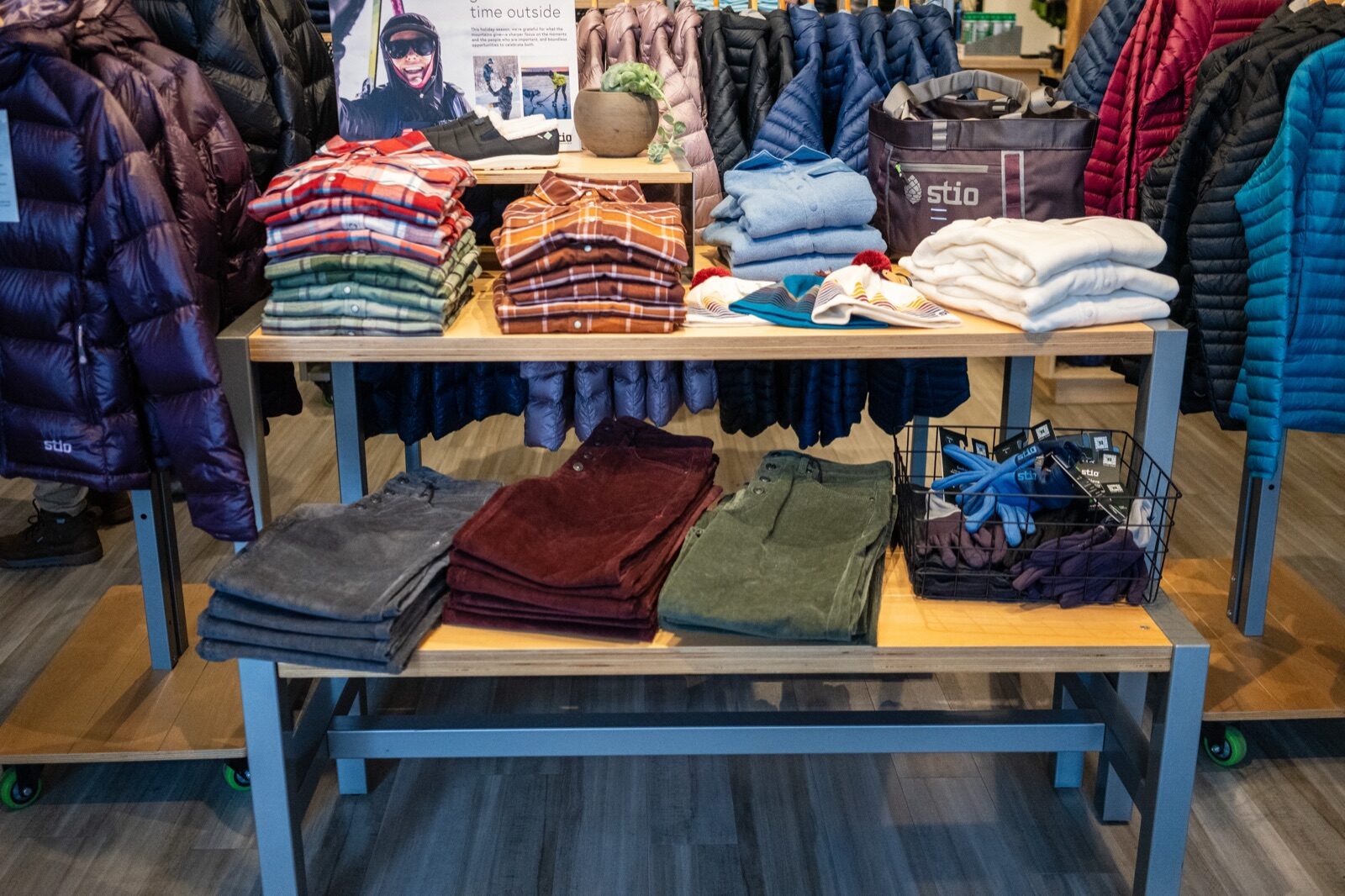
A nesting table set is two or three tables of graduated height that tuck into each other, most often carrying folded apparel near the front of a store.
They earn their place by being the most adaptable thing on a selling floor. A set pulls apart for a big seasonal statement, nests tight to clear space for an event, and goes back together in ten minutes without tools. The outdoor and sport brands we build for run in-store events constantly now, and that flexibility ends up mattering more than almost any other quality a table has.
What separates a good set from a bad one is the edge and the joint. Folded product gets handled all day, the table edge absorbs every bit of that wear, and a veneer edge that chips in month four makes the entire front of the store look neglected. Because we build to order instead of selling from a catalog, the material and the joint are decisions somebody makes on purpose, and this is the fixture where solid material pays for itself fastest.
Freestanding apparel fixtures
Most of what holds apparel in an outdoor or sport store is not on a wall or a gondola. It stands on a rack in the open, and that rack does something the perimeter cannot, because it pushes one story into the middle of the room where a customer meets it before they have decided what they came for.
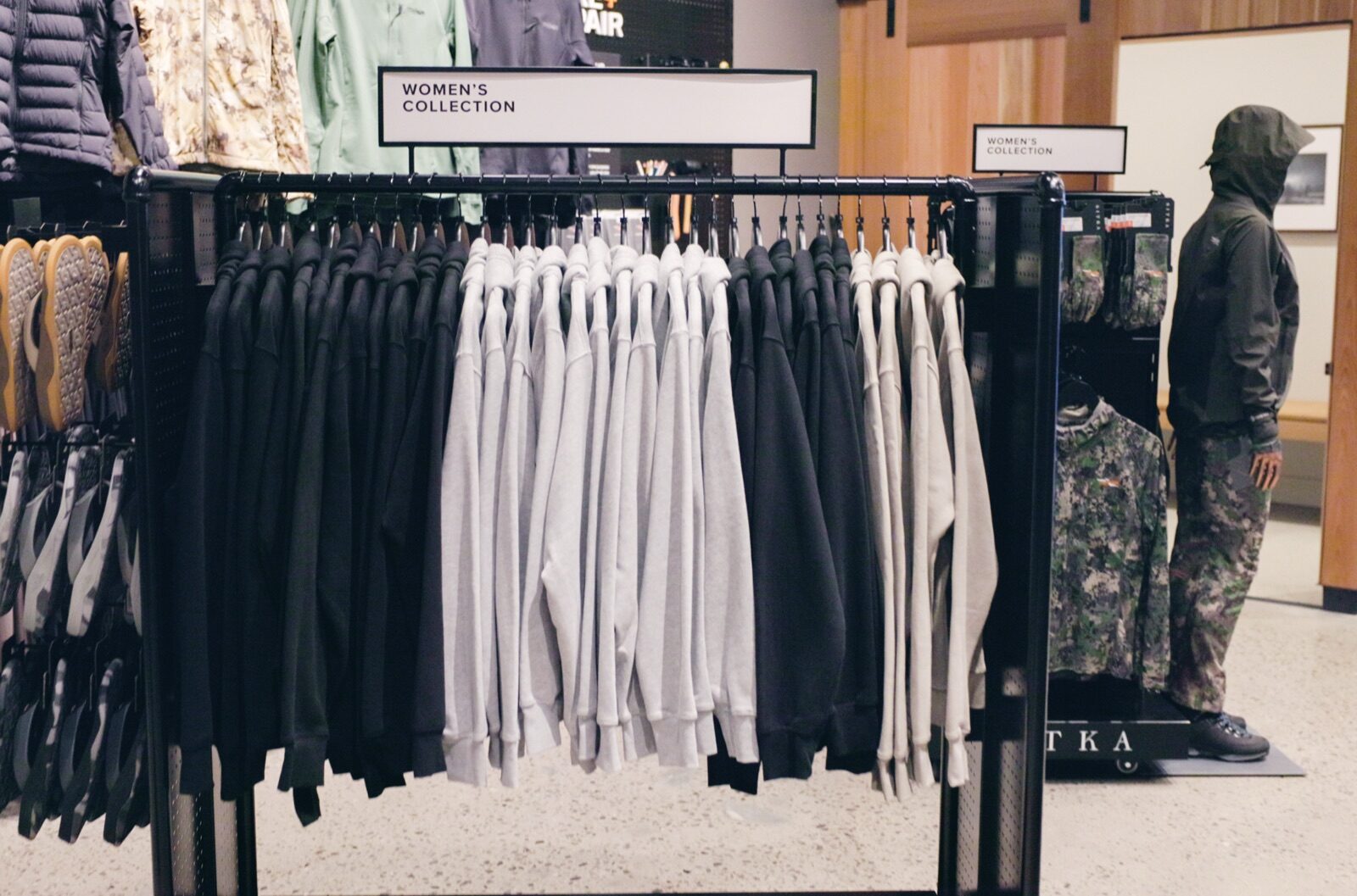
Each type has a job. A two-way carries apparel face-out on two arms and makes a focused statement in a tight footprint, which is what you want for a single drop or a hero piece near the entrance. A four-way adds two more arms and tells a full outfit from every side, so a customer circling it reads the jacket, the mid-layer, and the pant without a staff member walking them through it. A ballet bar is a hang rail on locking casters that rolls out for an event and back again without anyone pulling product off it. A rounder holds a lot of one thing in a circle, which is the fixture for a promotion or a deep size run.
Because we build the two-way, the four-way, and the ballet bar to order, the finish matches the rest of the room instead of announcing itself as a rack, and the arms carry the same recessed accessories as the wall system. A merchandiser moves a faceout from the wall to a floor rack without a tool and without hunting for a part that fits. On the apparel floors we build for brands running frequent drops and in-store events, the casters are the detail that earns their keep, because a floor that has to clear for a Thursday-night event and reset by Saturday depends on fixtures that roll rather than fixtures that get carried.
Countertop and point-of-purchase units
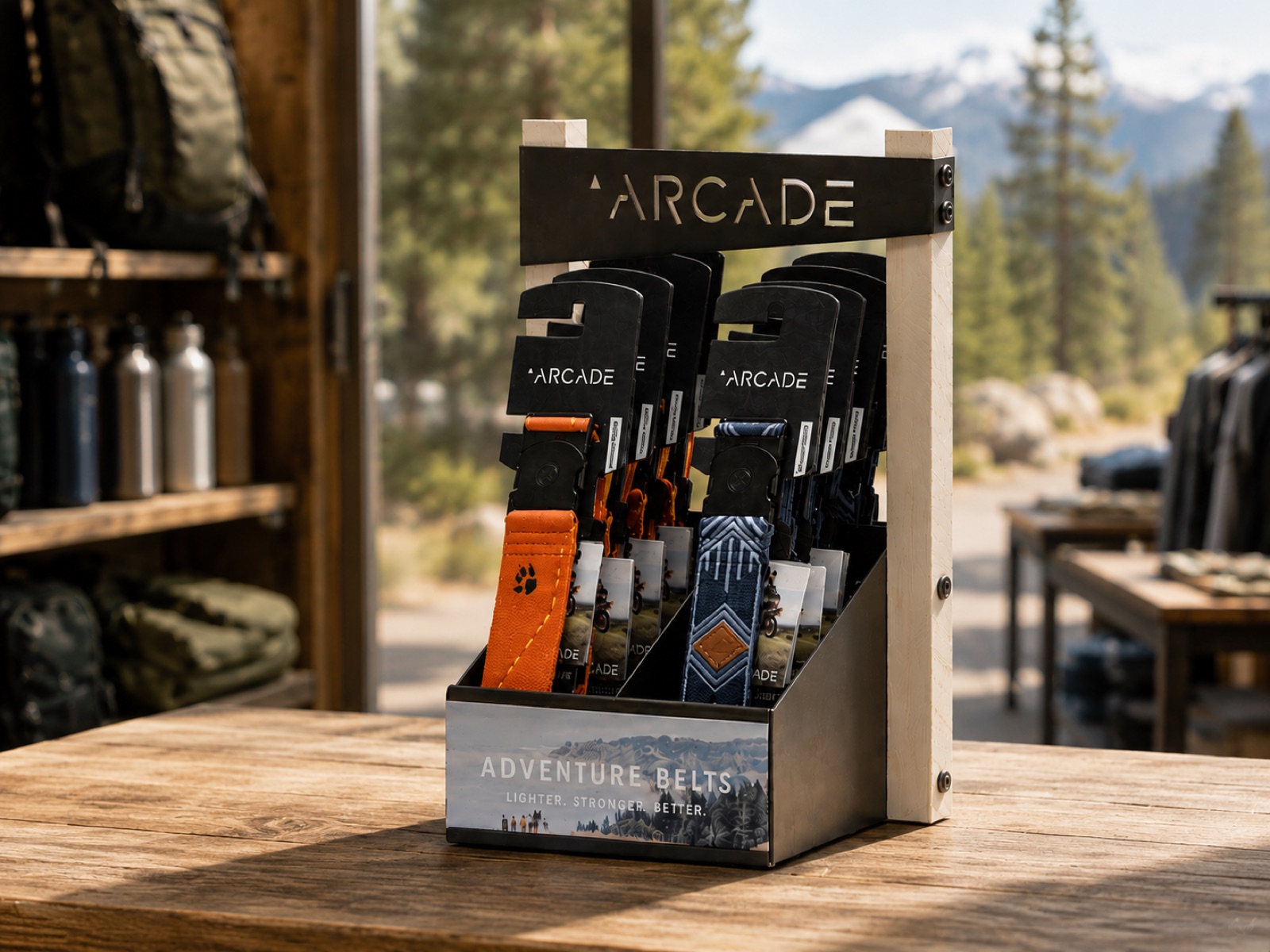
These are the small ones, sitting at the cash wrap or on top of another fixture, holding the accessory and the impulse buy and the new launch.
They are also the fixture most likely to be ordered in the thousands and shipped to hundreds of doors, which makes them a different engineering problem from anything that lives in one store. A countertop unit has to survive freight, get assembled by whoever happens to be on shift at a partner store with no drawing in front of them, and look identical in every location.
That last part is the one brands underestimate, because a unit that requires interpretation gets interpreted, and store twelve stops matching store one. Twenty years of Patagonia's fixture needs and a long run of rollouts for Smith Optics have taught us the answer is engineering rather than design. The piece has to assemble one way and no other way. Our Southern California warehouse then receives, stores, and kits every unit, tracks it through 3PL software, and ships within twenty-four hours, so a five-hundred-door program arrives on each store's schedule instead of all at once.
Cases, cash wraps, and the ones with no catalog page
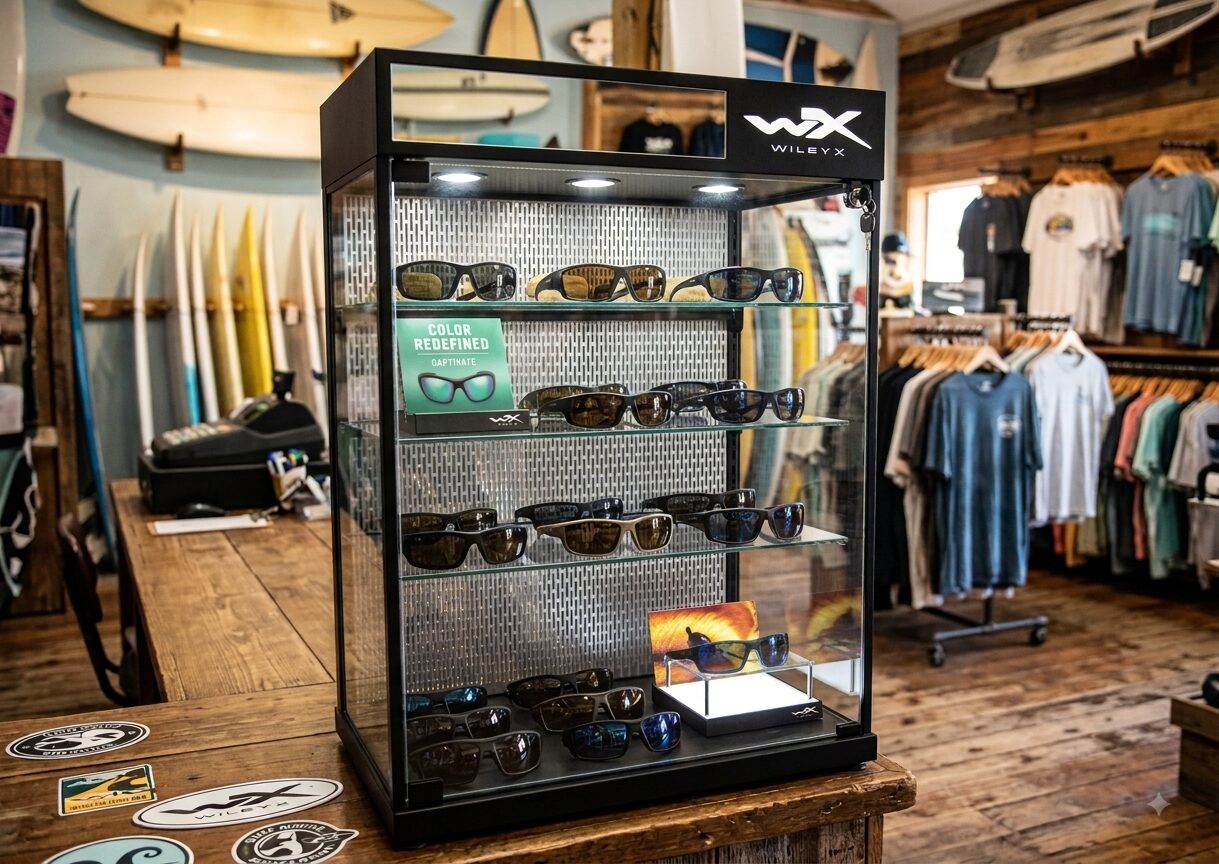
Locking cases handle high-value product like sunglasses, watches, and premium accessories, and the tradeoff is worth naming plainly. Anything behind glass sells less unless someone opens it, which buys security at the cost of engagement, and that is a decision to make deliberately rather than inherit.
The cash wrap is the one fixture every single customer is guaranteed to stand at, and it is routinely the last thing anybody designs.
Then there is the category with no catalog page at all. Selkirk wanted a full-size pickleball court inside the store so a customer could feel the difference between paddles before buying one, and the Paddle Bar anchoring the center of that room came out of the same conversation. For Fanatics we built the retail floor inside a members-only space. Fixtures like these start with a question about what would make someone stay longer, and they get drawn backward from the answer.
How the types compare
- Wall systems. Best for a brand statement and perimeter merchandising, good for five to ten years. Stock reads generic and is hard to reset.
- Gondolas. Best for volume and aisle-based floors, good for five to ten years. Stock heights and finishes are built for capacity rather than sightlines.
- Nesting tables. Best for flexible apparel merchandising and in-store events, good for five to ten years. Stock edges and joints fail under daily handling.
- Freestanding apparel racks. Best for apparel statements, floor flexibility, and events, good for five to ten years. Stock arrives with a generic finish and arms that do not match the wall system.
- Countertop and point-of-purchase. Best for impulse, launches, and wide rollouts, lasting a season to two years. Stock assembles inconsistently across doors.
- Cases and cash wraps. Best for high-value product and checkout, good for five to ten years. They are the fixtures most often left undesigned.
- Specialty. Best for experience and dwell time, lasting the life of the store. No stock equivalent exists.
When stock stops being the cheap option
Stock fixtures are the right call in plenty of situations, including a single location, a short lease, a test market, or any format where price is the message.
At scale and over time the calculation moves, and it moves in a direction that surprises people. Three things drive it.
The first is replacement. A unit built to a price point gets replaced once or twice inside the window a made-to-order one is still working, and two replacement cycles plus the labor to swap them usually erases whatever came off the original invoice.
The second is consistency across doors, and it is the expensive one. Once a program passes roughly a dozen locations, stores not matching each other stops being an aesthetic problem and becomes an operational one, because every variation turns into a merchandising instruction somebody has to write, send, and follow. Fixtures engineered to install the same way in one hundred locations remove that work entirely.
The third never makes it into the spreadsheet. A store assembled from parts the customer has already seen somewhere else does not feel like the brand, and that shows up in dwell time and conversion rather than on a line item.
Twenty years of Patagonia's fixture needs have taught us which of the three matters most, and it is almost always the second. The programs that last are the ones where the reorder in year six drops into the same footprint as the original.
Choosing, in practice
Start with the format rather than the fixture. A shop-in-shop inside a partner's store is a consistency problem before it is a design problem, because the whole point is that your corner reads as yours and not as the shelving beside it. A flagship works the other way around, since there the room itself is part of the product. A wholesale display rollout is a logistics and engineering program wearing a fixture's clothes.
Then ask how often the floor has to change. Brands running frequent drops or regular in-store events need that adaptability designed in at the start, because it is expensive to add later.
Then ask what happens in year three. Most fixture regret comes down to choosing for the opening date rather than for the third season.
We design the fixtures and build them in our own factory, so the person who drew the joint is accountable for how it holds up. Our Southern California warehouse handles receiving, kitting, and delivery timing for a program's whole footprint, which is how a hundred-door rollout arrives when each store is ready for it.
If you are earlier than this and still working out what kind of retail presence to build, we wrote about choosing between shop-in-shop, pop-up, and flagship as a starting point.
Frequently asked questions
What are the different types of retail displays?
The main categories are wall systems, gondolas and floor shelving, nesting tables, countertop and point-of-purchase units, and cases and cash wraps. Wall systems and gondolas carry the bulk of the product, nesting tables handle flexible apparel merchandising, and countertop units hold impulse and launch product near checkout.
What is the difference between a retail fixture and a display?
A fixture is the permanent architecture of the selling floor and is meant to last five to ten years. A display is shorter-lived and closer to a campaign, like a seasonal endcap or a countertop unit built for one product launch. The practical difference is budget, since fixtures are a capital decision and displays sit closer to marketing spend.
What are gondola shelves used for?
Gondolas are freestanding double-sided shelving units that form the aisles in the middle of a store. Grocery and mass retail use full-height gondolas for capacity, and brand retail uses lower ones so a customer standing at the entrance can see across the whole floor.
What are nesting tables in retail?
Nesting tables are sets of two or three graduated-height tables that tuck into each other, used mostly for folded apparel near the front of a store. They pull apart for a seasonal statement and nest together to clear floor space for an event, which makes them the most adaptable fixture on a typical selling floor.
What is the difference between a two-way and a four-way rack?
A two-way carries apparel face-out on two arms and makes a focused statement in a small footprint, which suits a single drop or a hero piece near the entrance. A four-way adds two more arms and shows a full outfit from every side, so a customer circling it reads the jacket, the mid-layer, and the pant at once. Both stand on the open floor rather than the perimeter wall, which is what lets a rack pull a story into the middle of the room.
What is slatwall used for?
Slatwall is a grooved panel that lets brackets, shelves, and hooks be repositioned without tools, most often on a store's perimeter walls. It is inexpensive and widely available, though inside a branded environment it tends to read as generic because customers have seen the same panel in unrelated stores.
When should a brand use custom fixtures instead of stock?
Stock makes sense for a single location, a short lease, or a test market. Custom becomes the better economics at scale and over time, because stock units get replaced once or twice in the life of a made-to-order one, and because consistency across doors turns from an aesthetic concern into an operational cost somewhere past a dozen locations.
Working out what your floor actually needs?
Whatever mix of fixtures your program calls for, the work holds up better when the team that draws it also builds it. Let's talk about your program.


