Retail Expansion Strategy: Flagship vs. Pop-Up vs. Shop-in-Shop
Most brands arrive at physical retail from a position of strength. The wholesale business is healthy, the online store converts, and the customer already knows the name. What is missing is the room where someone can pick the product up and decide they want it. At that point the question is not whether to be in physical space, it is how to enter it without overbuilding for the moment the brand is actually in.
There are a handful of real paths, and they suit different brands at different times. A brand ready to plant a flag wants a room built around how its customers actually shop. A brand testing a new city wants something it can stand up in a few weeks and take down without regret. A brand protecting a wholesale relationship wants its corner of a partner's store to look like its own and not like the shelf next to it. Choosing well starts with being honest about which of those you are right now.
The methods of retail expansion
Most retail expansion strategies fall into four categories. They differ in cost, in how much control you keep over the experience, and in how quickly you can be open.
Flagship or branded store
A flagship is the permanent, fully branded store, the place a brand becomes a destination rather than a stop. JOOLA opened its first branded location in Bethesda after building its reputation on professional-grade paddles sold mostly online. Selkirk built a store around a full-size pickleball court, so a customer could pick up a paddle and feel the difference before buying it. adidas chose a flagship for its first US soccer store. These cost the most and take the longest, and they return the most control over how the brand is experienced. A flagship is the right call when the store itself is part of the product.

Pop-up
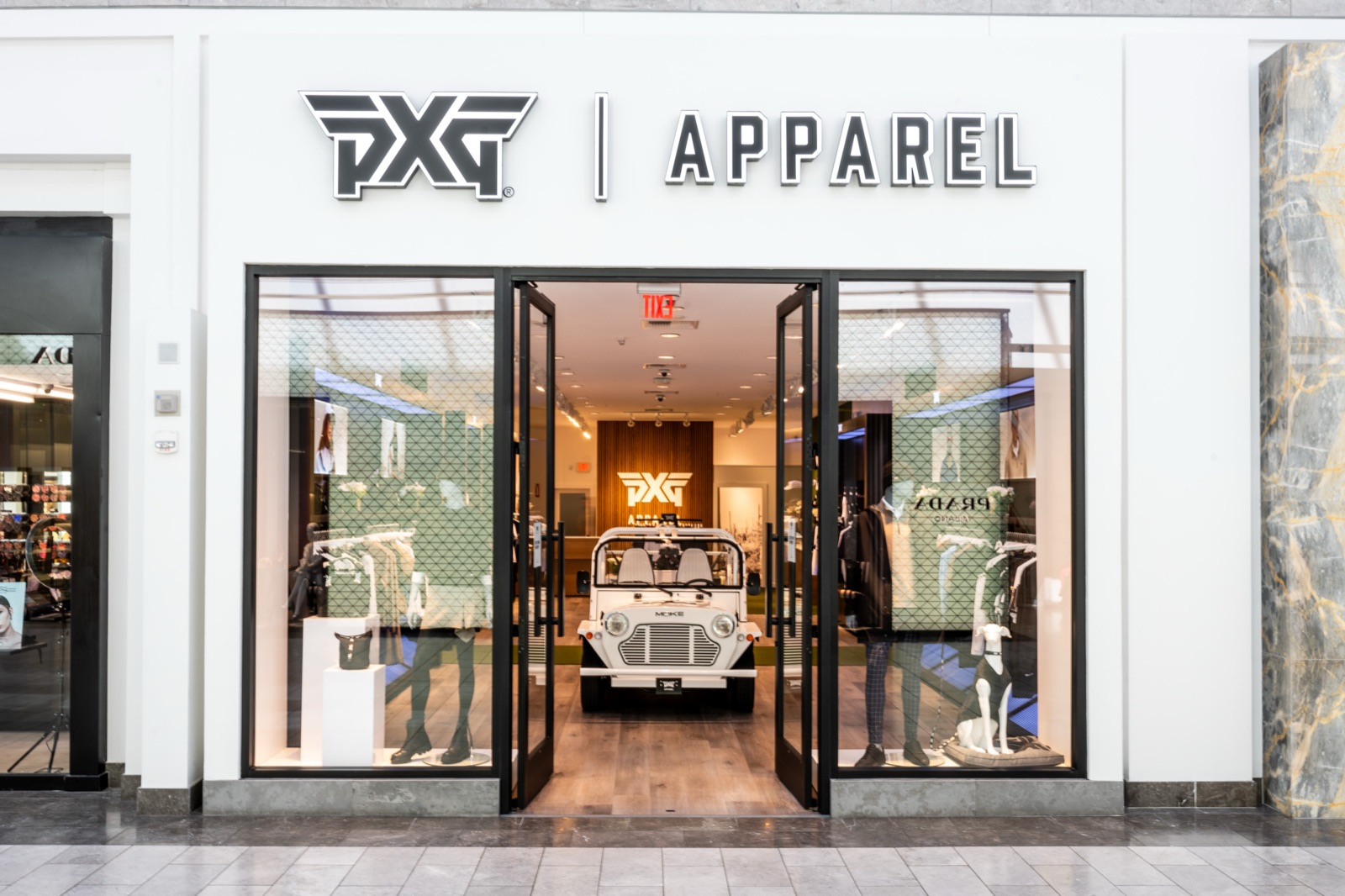
A pop-up is temporary by design. You take a short lease or a spot inside an event, run it for a season or a product launch, and learn whether the market is there before you commit to anything permanent. The appeal is speed and low risk. You find out whether the foot traffic converts and whether the local customer matches the one you imagined, and you keep the option to walk away. PXG took this route with its first boutique apparel pop-up, using a short-run space to bring a premium retail experience to market before committing to anything permanent. A pop-up rewards a brand that treats it as a test with real questions attached, not as a smaller flagship.
Shop-in-shop
A shop-in-shop is a branded space built inside another retailer's store, the way a brand takes a defined footprint inside REI or Dick's and makes it read as its own environment rather than a run of shelving. You borrow the partner's foot traffic and location, and in return you get a smaller, controlled space to tell your story. The version that works looks intentional, with fixtures made for the brand instead of pulled from the host store's kit. Most of what separates a strong shop-in-shop from a forgettable one comes down to whether the space was designed for the brand or fitted into what was already on the floor.
The part brands underestimate is consistency. A shop-in-shop program usually means dozens of partner doors, and the reason to invest in real fixtures is that store twelve should look like store one. That is an engineering problem as much as a design one, and it is where a lot of programs quietly fall apart.

Wholesale fixture and display rollout
The fourth path is not a store at all. It is the brand's own fixtures and displays living inside hundreds of retail partners, from a single endcap to a full section reset. For many brands this is the largest and longest-running part of their physical presence. Patagonia has trusted us with its fixture needs for twenty years, and Smith Optics is another brand whose rollouts we have run over the long haul, which is the kind of relationship a rollout becomes when the units hold up and reorder cleanly. The interesting work here is engineering a fixture so it installs the same way in one hundred locations, and getting it to all of them on schedule.

How the paths compare
The right path depends less on ambition than on where the brand is and what it is trying to learn or protect.
- Flagship. Slow to open, high cost, high control. Fits a brand ready to make the store itself part of the product.
- Pop-up. Fast to open, low cost, medium control. Fits a brand that wants to test a market or launch before committing.
- Shop-in-shop. Medium speed, medium cost, medium-to-high control. Fits a brand growing through wholesale partners that needs consistency across doors.
- Wholesale rollout. Medium to open then ongoing, cost that scales with volume, control focused on the fixture rather than the room. Fits a brand that sells through many doors and reorders year over year.
Most brands do not pick one and stop. A pop-up proves a market, a flagship anchors it, and a rollout keeps the brand in front of shoppers everywhere it does not have a store of its own.
What brands get wrong when they expand
We have watched retail programs hold up or fall apart over twenty years, which is long enough to have a few opinions worth stating plainly.
The first mistake is treating a rollout like a series of one-off projects. When every location is designed and sourced on its own, the fixtures drift, the finishes stop matching, and by the twentieth store the brand no longer looks like itself. A rollout is an engineering and logistics program from the first unit, not a design that gets repeated later.
The second is buying fixtures from a catalog to save money at the start. A catalog fixture makes your store look like the one down the block, and it tends to cost more over five years once you count the pieces that wear out and the reorders that never quite match. A fixture made for the brand and built to last is usually the cheaper decision by the time the lease is up.
The third is the handoff. A brand hires a design firm, approves a beautiful set of drawings, and then hands them to a separate builder who reinterprets them to fit what is easy to fabricate. The store that opens is a negotiated version of the one that was designed. Keeping design and construction under one roof removes that gap, because the people drawing it are accountable for building it.
How to choose the right path
Start with the honest version of your situation. If the store itself would change how customers understand the brand, a flagship earns its cost. If you have never operated a physical store and you are not sure the demand is there, a pop-up answers that question for a fraction of the cost of finding out the hard way. If your growth is coming through wholesale partners, a shop-in-shop program protects your presence inside their stores and keeps it consistent as it scales. And if you already sell through many doors, the fixture and display rollout is likely the largest lever you have, whether or not you ever open a store of your own.
The store buyer and the rollout buyer are often two different people inside the same company, thinking about two different timelines. The first is focused on the opening date and whether the space still looks right in two years. The second is focused on consistency across a hundred locations, reorder reliability, and what a unit actually costs over five years. A good expansion strategy answers both.
Designing and building for the path you choose
We design and build retail under one roof, carrying a project from first concept through final install, so nothing gets lost between the drawing and the floor. Every fixture is made to order for the brand it is for, and because we run our own factory, we keep direct oversight of quality, timeline, and cost. A client talks to the people building their store rather than an account layer relaying messages, and one point of contact carries the project from the first call through the final punch list. For rollouts, our Southern California warehouse receives, stores, kits, and ships to every location, so a hundred stores open on the same fixtures and the same schedule.
Frequently asked questions
What are the methods of retail expansion?
The most common are the flagship or branded store, the pop-up, the shop-in-shop, and the wholesale fixture and display rollout. Flagships give a brand a permanent destination, pop-ups test a market with low commitment, shop-in-shops place a branded space inside a partner's store, and rollouts put a brand's fixtures inside many retail partners at once. Most brands use more than one over time.
What is a shop-in-shop in retail?
A shop-in-shop is a branded environment built inside another retailer's store, with fixtures and design made for the brand so its space reads as its own. It gives a brand the traffic of an established store and a defined footprint it controls.
What is the difference between a shop-in-shop and a pop-up?
A shop-in-shop lives inside a partner retailer's store and is usually part of an ongoing wholesale relationship. A pop-up is a temporary, standalone space a brand runs on its own for a season, a launch, or a market test, then removes.
Is a flagship store worth it for a brand?
A flagship is worth it when the store itself becomes part of the product, the way a full-size court inside a store lets a customer test a paddle before buying. It costs the most and takes the longest, and it returns the most control over how the brand is experienced, so it fits brands ready to make a physical destination rather than test one.
Ready to expand your brand into retail?
Whichever path fits where you are, the work holds up better when the team that designs it also builds it. Let's talk about your expansion strategy.


